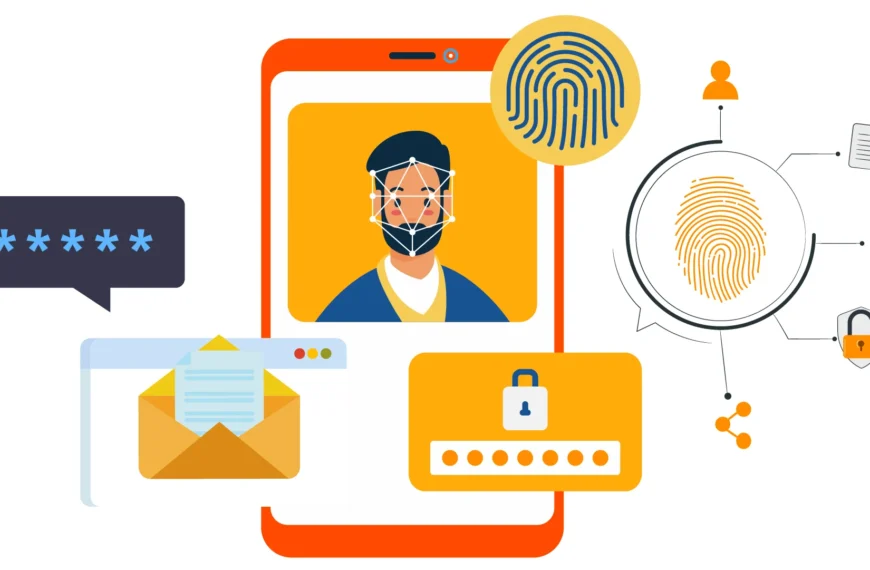
The Secure Access Control Report for the listed identifiers presents a structured view of safeguarding practices and governance. It links access events to discrete tokens, outlines layered defenses, and emphasizes audit trails, MFA, and Zero Trust. The document frames risk, responsibility, and resilience through clear policies and measurable processes. It pursues incident-driven improvement while preserving operational autonomy, inviting scrutiny of how each element supports legitimate use and deters unauthorized access—without surrendering the need to explore further.
What Secure Access Is Really Trying to Solve
Secure access control addresses a fundamental tension between usability and protection: how to permit legitimate users to perform legitimate actions while restricting unauthorized access. The objective is to delineate risk, responsibility, and resilience through precise policy, layered defenses, and transparent processes.
Privacy governance and authentication ergonomics shape decisions, balancing consent with verification, reducing friction while preserving accountability, and enabling secure, freedom-centered organizational operation.
How 6156855230, 9737509291, 7783282169, 7143713895, 83702tv Tie to Access Events
This section analyzes how the sequence of numbers—6156855230, 9737509291, 7783282169, 7143713895, and 83702tv—maps onto access events within a governance framework. The pattern reveals events as discrete tokens, enabling precise role mapping and auditing.
Identified security gaps highlight drift between intention and access reality, guiding transparent governance without compromising freedom. Continuous refinement strengthens accountability and trust.
Practical Safeguards: MFA, Zero Trust, and Audit Trails
Practical safeguards for access control hinge on three interrelated components: multifactor authentication (MFA), a Zero Trust architecture, and comprehensive audit trails.
The analysis outlines how MFA reduces security gaps, Zero Trust enforces identity validation across boundaries, and audit trails enable ongoing access governance.
Threat modeling clarifies risk priorities, guiding controls, while precise authentication decisions balance freedom with measured risk.
From Incidents to Action: Building a Risk-Driven Access Control Program
From incidents to action, organizations translate observed breaches and near-misses into a structured, risk-driven access control program. The approach codifies lessons into policy, workflow, and controls, aligning with data governance objectives. By detailing incident-driven requirements, it supports continuous improvement in user provisioning, role definition, and access reviews, ensuring disciplined, auditable security while preserving operational autonomy and freedom.
Frequently Asked Questions
How Is Access Control ROI Measured Beyond Audits?
Access control ROI is measured through ROI valuation of policy automation and audit-free metrics, incorporating data sovereignty impacts, remote work incident timelines, anomalous access thresholds, and non human identity roles to determine access risk roles and broader value beyond audits.
What Roles Do Non-Human Identities Play in Access Risk?
Non-human identities influence access risk by automating privilege elevation and threat propagation; remote work dynamics amplify exposure. Data sovereignty considerations constrain policy enforcement across jurisdictions, enhancing risk unless governance aligns with identity controls, monitoring, and continuous risk assessment.
How Can Data Sovereignty Affect Access Policy Decisions?
Metaphor anchors the analysis: data sovereignty constrains decisions, shaping access policy and privacy controls through localization requirements; organizations weigh jurisdictional limits, compliance costs, and risk tolerance to balance freedom with governance in data handling.
What Constitutes Effective Anomalous Access Detection Thresholds?
Effective thresholds balance false positives and negatives, establishing baselines, variance, and adaptive limits; anomalous detection requires context-aware, evolving rules, continuous monitoring, and clear escalation criteria to achieve reliable, equitable access integrity for freedom-minded stakeholders.
How Should Incident Response Timelines Adapt to Remote Work?
A 28% rise in incident response times during remote work is observed, yet preparedness varies. The analysis indicates incident response must adapt—streamlining cross-team collaboration, codifying playbooks, and enabling rapid remote containment and recovery under distributed workloads.
Conclusion
The report closes with a methodical, risk-driven blueprint that binds access events to governance through tokens, MFA, Zero Trust, and auditable trails. It treats incidents as signals for continuous improvement, translating them into concrete provisioning and review actions. Like a finely tuned diagnostic engine, it reveals weaknesses, verifies protections, and sustains accountability while preserving operational autonomy. Ultimately, disciplined governance and layered defenses converge to maintain secure, usable access in a complex environment.