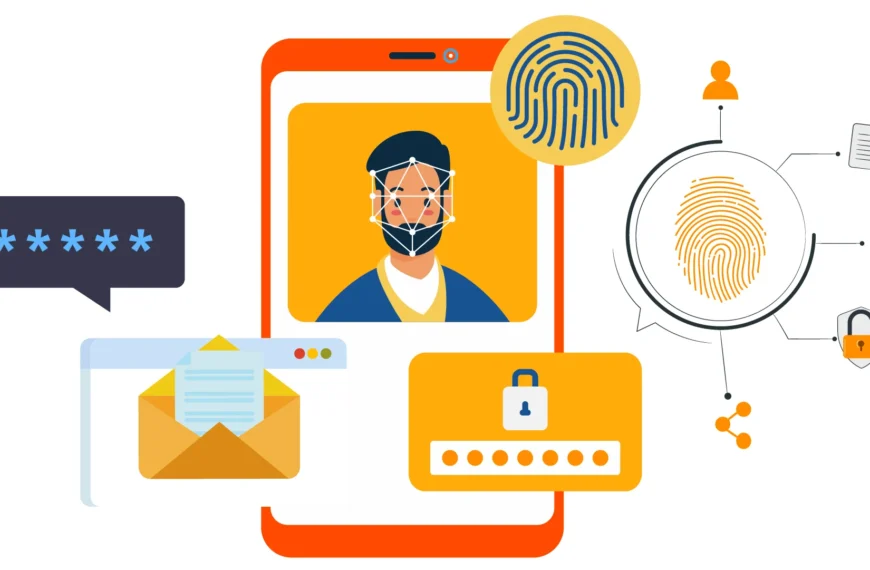
AetherLink Hyper Vault presents a centralized, highly secure platform for managing critical assets and access signals. It emphasizes auditable governance, privacy-by-design, and scalable modular controls. The five identifiers map to distinct security patterns, workflows, and governance rules, creating a cohesive framework for rapid yet disciplined access. The architecture aims to balance speed with risk management, enabling proactive risk controls and transparent oversight. The implications for policy, architecture, and operations invite further examination to determine practical impact.
What Is Aetherlink Hyper Vault and Why It Matters
AetherLink Hyper Vault is a modular, high-security data and resource platform designed to centralize, protect, and accelerate access to critical digital assets. It operates through disciplined Aether security practices and structured Vault governance, ensuring resilient, auditable control. The system analyzes access patterns, reinforces containment, and optimizes workflows, delivering transparent governance, proactive risk reduction, and freedom-enabled collaboration across distributed teams.
Split paragraphs as required.
How the 18339421911, 8443196137, 18774014903, 6572551291, 18008690479 Identifiers Map to Security and Access Patterns
The mapping of identifiers 18339421911, 8443196137, 18774014903, 6572551291, and 18008690479 to security and access patterns is examined through a structured lens that connects identity signals to governance rules and workflow outcomes. This security mapping clarifies channeling access patterns, reduces ambiguity, and reveals governance friction.
Conclusions emphasize proactive controls, auditable traces, and freedom through principled, precise policy enforcement.
Architecting for Speed, Scale, and Privacy: A Practical Blueprint
Could speed, scale, and privacy be harmonized within a practical blueprint that guides governance without compromising agility? The architecture emphasizes privacy by design and scalable authorization, enabling modular governance with minimal friction. A proactive posture anticipates risk, embeds controls early, and preserves data sovereignty. Transparent auditing, deterministic SLA alignment, and decoupled services sustain performance while honoring user autonomy and collective trust.
From Migration to Everyday Governance: Maximizing Reliability and Control
From migration to everyday governance, the focus shifts to sustaining reliability and control through continuous, policy-driven operations rather than episodic deployments.
The discussion emphasizes conceptual scaffolding that supports durable decision-making and transparent accountability, integrating governance rituals into routine practices.
This approach enables resilient autonomy, ensuring predictable outcomes while balancing freedom with disciplined oversight and proactive, data-informed adjustments.
Frequently Asked Questions
How Does Aetherlink Hyper Vault Handle Key Revocation
The system employs key revocation through auditable revocation lists and certificate pinning, ensuring compromised credentials are invalidated promptly, even in offline operation. It maintains integrity via offline operation checks, enabling proactive, freedom-oriented administrators to respond decisively.
What Are Failure Modes During Peak Migration Windows
During peak migration windows, potential failure modes include degraded response strategy under load, partial failures in synchronization, and latency spikes; these are evaluated against integration challenges, with proactive monitoring, rollback options, and meticulous fault isolation guiding adaptive responses.
Can Vaults Operate Offline or With Intermittent Connectivity
The system can operate in offline mode and with intermittent connectivity, though performance and synchronization degrade. It analyzes risks, preserves data integrity, and proactively buffers updates, enabling resilient autonomy for users who value independence and continuity during disruption.
How Is Disaster Recovery Tested and Validated
Disaster recovery is tested through simulated outages and validated via repeatable metrics; it analyzes neural drift, assesses quantum disruption tolerance, and proves RTO/RPO adherence, verifying failover reliability, data integrity, and operator readiness under varied, controlled conditions.
What Audit Trails Are Available for User Access Events.
Audit trails document user events comprehensively, enabling traceability, anomaly detection, and forensic review. They integrate revocation handling and key lifecycle events, providing proactive visibility into access patterns while preserving freedom to evaluate and challenge safeguards.
Conclusion
The analysis confirms that the five identifiers function as tightly coupled signals shaping access, workflows, and governance within AetherLink Hyper Vault. The mapping supports faster decision-making while preserving privacy and auditable control. While the theory of intrinsic linkage across identifiers holds under the current architecture, its resilience hinges on continuous threat modeling and rollout discipline. Practically, ongoing monitoring and modular governance updates are required to sustain reliability, transparency, and policy-aligned access at scale.