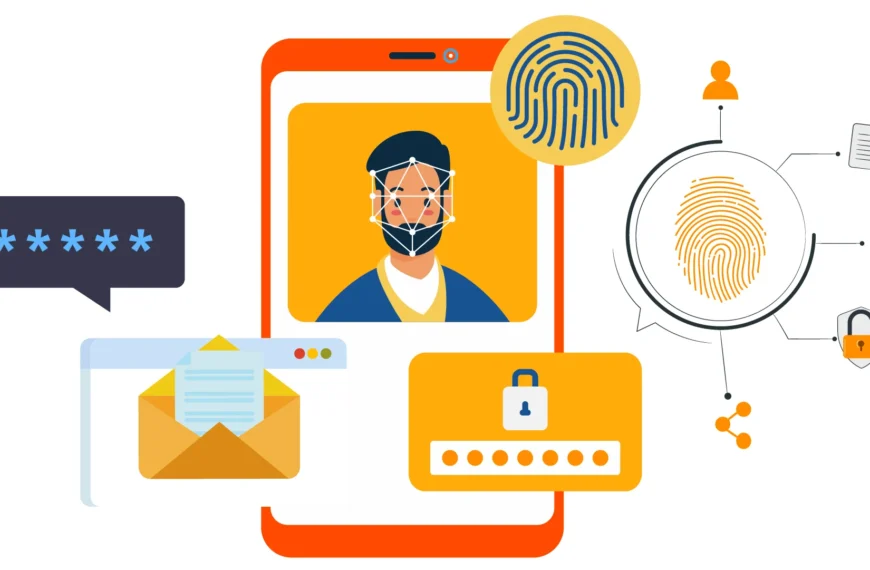
The System Authentication Tracking Report on IDs 6468539590, 5059983792, 8016824584, 5144002373, and 8557219251 consolidates timing, device usage, and credential scope to map risk profiles. It focuses on session lifecycles, login attempts, and anomaly signals across entries. The analysis highlights divergent resilience gaps and adaptive control needs. A disciplined approach to MFA, provisioning, and governance emerges as essential, with implications that invite a closer look at concrete mitigations and implementation challenges.
What the Identifiers Reveal About Authentication Patterns
The identifiers analyzed in this report illuminate distinct authentication patterns across users and systems. The analysis proceeds with disciplined observation, highlighting variation in access times, device types, and credential scopes. Findings suggest proactive modeling of risk and resilience, enabling adaptive controls. Two word discussion ideas, subtopic irrelevant, emerge as strategic prompts for governance and freedom-oriented security enhancements.
Analyzing Login Attempts and Session Lifecycles by ID
Analyzing login attempts and session lifecycles by ID reveals how authentication events diverge across individual identifiers, enabling a granular view of risk and resilience.
The analysis frames two word discussion ideas, subtopic; irrelevant pairings, highlighting how each ID exhibits distinct timing, retries, and session termination patterns.
This precise, proactive approach clarifies security posture, guiding freedom-minded teams toward targeted mitigations and resilient workflows.
Spotting Anomalies and Risk Indicators Across the Five Entries
Across the five entries, anomalies and risk indicators are identified by juxtaposing timing, frequency, and outcome patterns across identifiers, enabling rapid differentiation between benign deviations and potential threats.
The analysis highlights anomaly indicators and risk indicators within authentication patterns, noting login attempts and evolving session lifecycles.
Findings inform access controls, guiding proactive hardening steps and safeguarding freedom through disciplined vigilant monitoring.
Actionable Hardening Steps to Strengthen Multi-Factor and Access Controls
Many practical hardening steps are presented to strengthen multi-factor authentication (MFA) and access controls, focusing on concrete controls, measurable outcomes, and timely deployment.
The analysis identifies identification gaps and credential exposure as core risk drivers, advocating layered verification, robust provisioning, and continuous monitoring.
This proactive approach emphasizes auditable change controls, minimized attack surfaces, and rapid remediation to sustain resilient authorization across environments.
Frequently Asked Questions
How Were the IDS Originally Generated for These Entries?
The IDs were originally generated through a randomized, non-sequential process, minimizing traceability. This approach raises privacy implications of aggregating these identifiers, since linkage across systems could reveal patterns and user activity beyond individual entries.
Do These IDS Map to Specific User Accounts or Devices?
The IDs do not map to specific user accounts or devices; instead, they function as anonymized tokens. Data generation appears consistent, enabling cross-reference while preserving privacy, with IDs mapping abstractly to events, not to identifiable entities.
What Is the Data Retention Period for the Tracking Report?
The data retention period for the tracking report varies by system policy, with explicit retention periods defined regionally. It operates within a clear regulatory framework, ensuring responsible handling and freedom-oriented governance across diverse regional scopes.
Are There Privacy Implications of Aggregating These Identifiers?
Like a tightrope walker, the report raises privacy implications and data aggregation concerns, highlighting security concerns and user consent. It analytically assesses how identifiers converge, urging proactive measures to safeguard privacy while preserving user autonomy and freedom.
Can the Report Be Reproduced With Different Timeframes or Regions?
Yes, the report can be reproduced with different timeframes or regions through precise data extraction and parameterized queries, enabling realtime replication and cross region testing while preserving methodological rigor and user-empowered analytic freedom.
Conclusion
This report crystallizes patterns across five identifiers, revealing synchronized login rhythms, varied session lifecycles, and divergent credential scopes. It highlights consistent anomaly signals and risk indicators, aligning them with targeted mitigations. It demonstrates proactive hardening through MFA and provisioning controls, while enforcing governance-driven change processes. It codifies disciplined monitoring, adaptive controls, and auditable practices. It underscores resilience: detection, defense, and deployment harmonized, as risk signals converge, protections deepen, and authorization remains robust across environments.