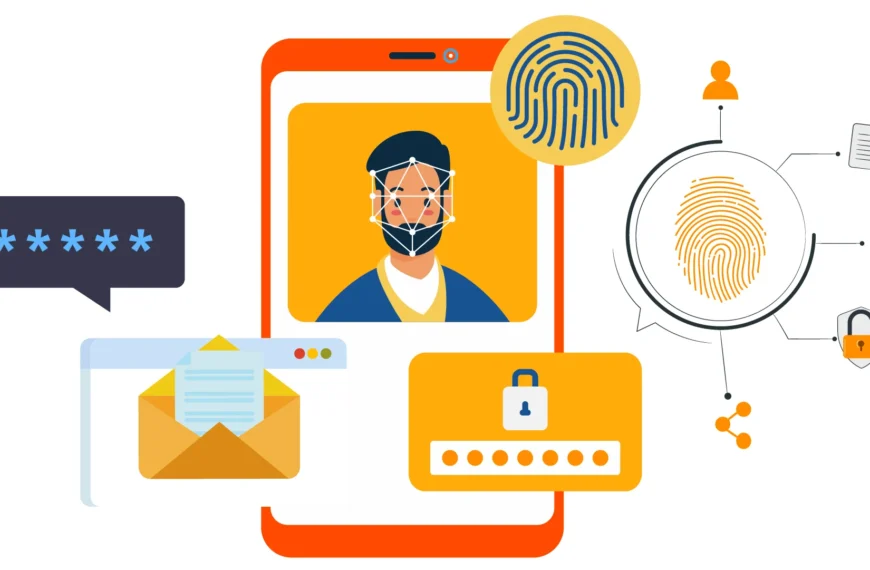
The Information Flow Authentication Report outlines a structured approach to verifying origin, integrity, and provenance for five IDs. It emphasizes traceable, reproducible paths and immutable provenance through cryptographic checksums and cross-flow verification. The document presents modular, auditable procedures supported by continuous verification and governance. While the framework is clear, practical gaps remain in implementation detail and threat modeling for evolving flows, inviting further examination of how autonomous teams can sustain compliant, consent-driven data stewardship.
What Is Information Flow Authentication and Why It Matters
Information flow authentication is a security discipline focused on verifying that data traversing a system originates from legitimate sources and maintains integrity as it moves between components. It emphasizes traceability, reproducibility, and controlled exposures. This approach supports privacy safeguards and accurate data provenance, enabling durable accountability. By detailing trusted paths, it clarifies risk, improves auditing, and underpins robust, consent-driven information stewardship.
Mapping the Authentication Paths for IDs 6098038431 and 3509353823
The analysis proceeds from the prior discussion of information flow authentication by focusing on concrete path mapping for the identifiers 6098038431 and 3509353823.
Mapping paths are delineated through discrete stages, exposing data interactions and control signals.
This methodical reconstruction clarifies ids relevance, revealing dependencies, potential bottlenecks, and audit points while maintaining analytical detachment and a clear emphasis on verifiable pathways.
Verifying Integrity Across Flows: 5168579329, 7866162454, and 41294910316
How can integrity be established across the distinct flows of 5168579329, 7866162454, and 41294910316, and what shared and divergent signals indicate trustworthy transitions?
The analysis identifies data lineage as the anchor for cross-flow verification, with immutable provenance tracking and cryptographic checksums clarifying consistency.
Threat modeling reveals potential mismatch patterns, enabling preemptive remediation while preserving freedom to adapt authentication boundaries.
Best Practices and Next Steps for Resilient Data Authentication
Best Practices and Next Steps for Resilient Data Authentication builds on established cross-flow integrity frameworks by outlining concrete, repeatable procedures that sustain trustworthy data movement.
The analysis emphasizes data provenance controls, disciplined threat modeling, and continuous verification.
It favors modular, auditable processes, risk-aligned mitigations, and transparent documentation to empower autonomous teams while maintaining rigorous, defensible authentication throughout complex information ecosystems.
Frequently Asked Questions
How Often Should We Audit Authentication Flows for These IDS?
The audit cadence should occur quarterly, with cross domain validation confirmed in each cycle; this ensures timely detection of anomalies, maintains compliance, and sustains transparent oversight while preserving analytic freedom within structured governance.
What Are Common Failure Modes in Cross-Flow Integrity Checks?
Cross-flow integrity checks commonly fail due to data leakage, replay risk, and token expiry, revealing cryptographic rigidity and access control drift; middleware bottlenecks amplify issues, while inadequate governance invites subtle timing, synchronization errors, and misrouted authentication signals.
Can External Threats Impact ID 41294910316’s Authentication?
External threats can influence id 41294910316’s authentication, potentially altering authentication impact. An analytical assessment indicates throughput latency and end to end validation may be affected, implying mitigations should address intrusion patterns while preserving freedom in system design.
How Do Latency and Throughput Affect Authenticity Guarantees?
Latency impact and throughput effects influence authenticity guarantees by shaping timeliness and verification cadence; slower latency degrades real-time integrity checks, while higher throughput may dilute per-message scrutiny, requiring stronger aggregation practices to preserve confidence in authentication claims.
What Criteria Define Successful End-To-End Flow Validation?
Latency constraints and throughput optimization define successful end-to-end flow validation: accuracy, provenance, and reproducibility verified across hops, with deterministic timing, error bounds, and auditable state transitions, presented through juxtaposition of steady throughput against variable latency.
Conclusion
This report demonstrates that robust information flow authentication emerges from deliberate, repeatable processes. Coincidence aligns mapping, verification, and governance, suggesting that accurate provenance naturally follows disciplined paths. As IDs are traced across flows, cross-checks expose anomalies with orderly clarity, while cryptographic checksums anchor integrity in immutable records. The methodical cadence—define, map, verify, govern—predicts resilient stewardship. In this convergence of steps, data authenticity appears less accidental and more intentionally reproducible, guiding continuous improvement across evolving streams.